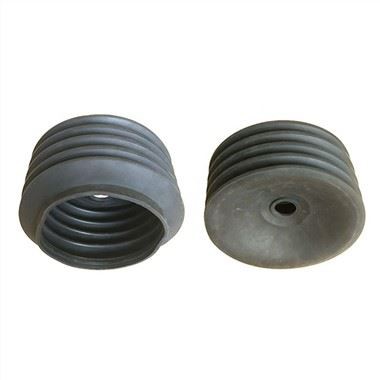
Rubber Bellows

STANDARD AND CUSTOM RUBBER BELLOWS

Select The Bellows Type Based On Application And Environment

Rubber bellows provide flexible protective covers for moving components against dust, dirt, water, oil and other contaminants. Common types include expansion joints for piping systems, silicone bellows for high-temperature and food-grade service, and custom-molded boots for automotive, hydraulic and industrial equipment. Material options include EPDM, NBR, CR, silicone and application-specific compounds.

Start with the application type, stroke or movement range, mounting dimensions, environmental conditions and fluid exposure. Then confirm the material, hardness and installation method. Custom sizes, shapes and compound formulations are available from drawings or samples.

O1CN01k9LOrK2DjvAAcuudf935818646-0-cib


First 12 Last 1/2

PRODUCT SELECTION

Choose The Right Bellow Type For Your Application

Rubber bellows come in different styles for different purposes. Expansion bellows are designed for piping and duct systems to absorb movement and vibration, while silicone rubber bellows are used for high-temperature, food-grade and sanitary applications where material purity matters.

Product Type Typical Applications  Confirm Before Release
Expansion Bellows Pipe vibration damping, thermal expansion compensation, ductwork flexible connectors, misalignment correction and noise reduction Pipe size, pressure rating, temperature range, media type, movement amount and flange connection type
Silicone Rubber Bellows High-temperature equipment, food processing, pharmaceutical, medical devices, sanitary piping and cleanroom applications Temperature range, food-contact certification (FDA/USP), sterilization method, movement stroke and mounting dimensions

Standard sizes are available for common pipe diameters. Custom sizes, shapes and special rubber compounds can be developed from drawings, samples or specifications.

12725375850107457925
APPLICATIONS

Match The Bellow To The System And Service Condition

Pipe & Duct Systems Pipeline expansion joints, ductwork flexible connectors and piping compensation. Absorb thermal expansion, vibration and misalignment in piping systems.
HVAC & Ventilation HVAC equipment, air handling units, fan connections and ventilation ducting. Reduce noise transmission and compensate for thermal movement.
Food & Beverage Processing Sanitary silicone bellows for filling machines, conveyors and processing equipment. FDA-grade material withstands CIP cleaning and temperature cycling.
Pharmaceutical & Medical Pharma processing equipment, medical devices and cleanroom systems. Silicone bellows meet USP Class VI and biocompatibility requirements.
Water & Wastewate Water treatment, plumbing systems and wastewater piping. EPDM expansion joints resist water, ozone and outdoor weathering.
High-Temperature Equipment Ovens, furnaces, hot air systems and high-temperature process lines. Silicone bellows handle extreme temperature ranges and thermal cycling.
RFQ CHECKLIST

Information Needed for Material Review and Quotation

1. Application type and equipment
2. Bellow style (expansion joint /boot/connector)
3. Continuous and peak temperature
4. Working and test pressure
5. Movement type and stroke length
6. Mounting dimensions (ID, OD, overall length)
7. Connection type (flange /clamp/bonded /other)
8. Material and hardness preference
9. Approval or compliance requirement
10. Order quantity and annual demand
Size Alone Is Not Enough

Dimensions alone identify the basic shape. They do not confirm material, hardness, pressure rating, movement life, chemical resistance or fatigue performance.

For an existing failed bellow, send the dimensions and failure condition. A cracked, hardened, swollen, torn or deformed bellow points to different corrections.

STANDARD AND CUSTOM SUPPLY

Control the Drawing, Compound and Inspection Method

Standard sizes can follow AS568, ISO 3601, metric or inch dimensions. Non-standard O-rings can be developed from a drawing, groove specification or sample. For repeat orders, keep the approved compound, drawing revision, hardness, tolerance, inspection method and packaging label under the same order record.

Automatic inspection equipment for rubber sealing parts
Inspection Based on Project Risk Typical controls include compound confirmation, hardness, ID, OD, cross section, surface condition, flash, packaging and batch consistency. Critical parts may require additional validation agreed before production.
YUEFENG rubber sealing parts facility
Approval Before Repeat Production Samples should be approved against the drawing and actual operating conditions. A color match or visual comparison cannot replace compound and dimensional confirmation.
Application Review
Material Confirmation
Drawing or Sample
Sample Inspection
Batch Production

Compliance Must Match the Exact Compound

A certificate does not automatically cover every EPDM, silicone or NBR compound. Confirm the certificate holder, compound reference, hardness, color, intended contact condition and validity before placing a regulated order.

Review Certification Information

Technical Reading

NBR vs FKM vs EPDM O-Rings
AS568 vs ISO 3601 O-Ring Sizes
Static vs Dynamic O-Ring Applications
Common O-Ring Failure Patterns
FAQ

Rubber Bellows Ordering Questions

What's The Difference Between An Expansion Bellow And A Rubber Boot?

Expansion bellows are designed for piping and duct systems to absorb thermal expansion, vibration and misalignment. Rubber boots (gaiters) are used to protect moving parts like rods, shafts and joints from dust and contaminants. The choice depends on your application, pressure and installation space.

What Dimensions Are Needed For A Custom Rubber Bellow?

Send the inside diameter, outside diameter, overall length and number of convolutions. Include mounting details like flange size, clamp dimensions or bonding surfaces. A drawing, sample photo or sketch is always helpful.

Can You Produce Bellows From My Drawing Or Sample?

Yes. Custom sizes, shapes and special rubber compounds can be developed from confirmed drawings, dimensions or approved samples. For sample-based projects, we recommend measuring multiple points and verifying the material type to avoid copying a worn or damaged part.

How Do I Choose The Right Bellow Material?

Start with the application, temperature range and environmental exposure. EPDM works for water, steam and outdoor weathering. Silicone is best for high/low temperatures and food-grade service. NBR is used for oil resistance, and CR for general outdoor duty with moderate oil exposure.

What's The Typical Lead Time For Custom Bellows?

Standard sizes can ship within 5-7 days. Custom bellows require mold development: sample tooling typically takes 10-15 days, and production tooling 20-30 days. First article samples are provided for approval before mass production.

Send the Operating Conditions Before Requesting a Price

Include the fluid, temperature, pressure, motion, O-ring size or drawing, hardness, compliance requirement and order quantity. Clear application data reduces material changes, sample revisions and repeated quotation work.

Request Material Review and Quotation


We're well-known as one of the leading rubber bellows manufacturers and suppliers in China. Please feel free to buy high quality rubber bellows made in China here here and get quotation from our factory. For customized service, contact us now.

(0/10)

clearall