

What is the coefficient of friction of a rubber washer?
May 27, 2025
Friction is a fundamental force that plays a crucial role in numerous applications, especially when it comes to rubber washers. As a leading supplier of rubber washers, I often receive inquiries about the coefficient of friction of these essential components. In this blog post, I will delve into the concept of the coefficient of friction, explore how it applies to rubber washers, and discuss its significance in various industries.
Understanding the Coefficient of Friction
The coefficient of friction is a dimensionless value that represents the ratio of the force of friction between two surfaces to the normal force pressing them together. It is denoted by the Greek letter μ (mu) and can be classified into two types: static and kinetic. The static coefficient of friction (μs) applies when the two surfaces are at rest relative to each other, while the kinetic coefficient of friction (μk) is relevant when the surfaces are in motion.
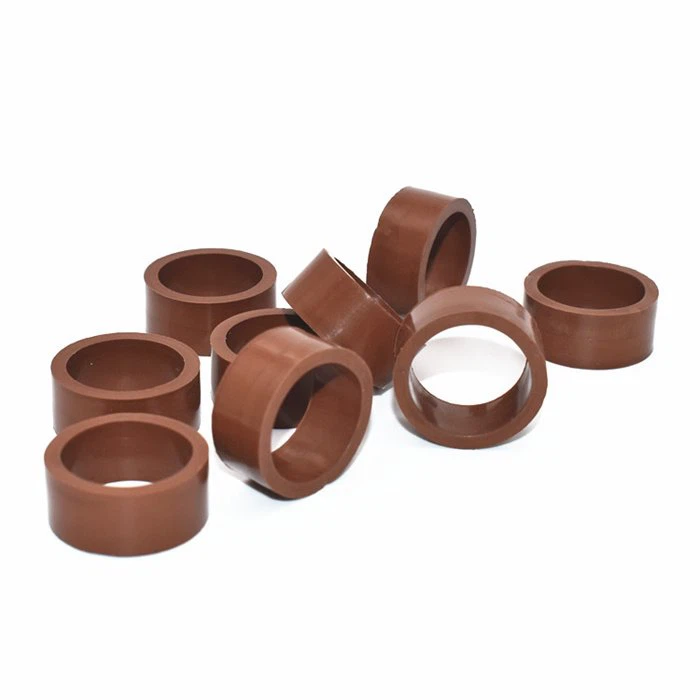

For rubber washers, the coefficient of friction is a critical property as it determines how well the washer can grip and seal against other surfaces. A higher coefficient of friction generally means better grip and sealing performance, but it also depends on the specific application and the materials in contact with the rubber washer.
Factors Affecting the Coefficient of Friction of Rubber Washers
Several factors can influence the coefficient of friction of rubber washers. Here are some of the most significant ones:
- Rubber Material: Different types of rubber have different coefficients of friction. For example, natural rubber typically has a relatively high coefficient of friction, making it suitable for applications where good grip is required. Synthetic rubbers, such as NBR Black Rubber Washer, Rubber Washer EPDM, and Silicone Rubber Washer Black, also have varying coefficients of friction depending on their composition and properties.
- Surface Roughness: The roughness of the surfaces in contact with the rubber washer can significantly affect the coefficient of friction. A rougher surface generally provides more friction, as the rubber can grip onto the irregularities more effectively. However, if the surface is too rough, it may damage the rubber washer and reduce its sealing performance.
- Temperature: Temperature can also have an impact on the coefficient of friction of rubber washers. As the temperature increases, the rubber may become softer and more pliable, which can reduce its coefficient of friction. Conversely, at lower temperatures, the rubber may become harder and more brittle, potentially increasing the coefficient of friction.
- Load: The amount of force pressing the rubber washer against the mating surface (the normal force) can influence the coefficient of friction. Generally, as the load increases, the coefficient of friction also increases, up to a certain point. Beyond this point, the rubber may start to deform or slide, and the coefficient of friction may decrease.
Measuring the Coefficient of Friction of Rubber Washers
Measuring the coefficient of friction of rubber washers can be a complex process, as it requires specialized equipment and techniques. One common method is to use a tribometer, which is a device that measures the frictional force between two surfaces under controlled conditions. The tribometer can be used to measure both the static and kinetic coefficients of friction.
Another approach is to conduct real-world tests in a specific application. For example, if the rubber washer is used in a bolted joint, the frictional force can be measured by tightening the bolt to a specific torque and then measuring the force required to loosen it. This can provide an indication of the coefficient of friction in that particular application.
Significance of the Coefficient of Friction in Different Industries
The coefficient of friction of rubber washers is important in a wide range of industries, including automotive, aerospace, plumbing, and electronics. Here are some examples of how it is used in each industry:
- Automotive Industry: In the automotive industry, rubber washers are used in various applications, such as engine gaskets, suspension systems, and electrical connectors. The coefficient of friction is crucial in these applications to ensure proper sealing, prevent leakage, and provide reliable performance. For example, in an engine gasket, a high coefficient of friction can help to prevent the gasket from shifting or leaking under high pressure and temperature conditions.
- Aerospace Industry: The aerospace industry has strict requirements for the performance and reliability of its components. Rubber washers are used in aircraft engines, hydraulic systems, and other critical applications. The coefficient of friction is carefully considered to ensure that the washers can withstand the extreme conditions of flight, such as high altitude, temperature variations, and vibration.
- Plumbing Industry: In the plumbing industry, rubber washers are used to seal pipes, faucets, and other fixtures. A high coefficient of friction is essential to prevent leaks and ensure a tight seal. For example, in a faucet, a rubber washer with a high coefficient of friction can prevent water from dripping and reduce water waste.
- Electronics Industry: In the electronics industry, rubber washers are used to provide insulation, cushioning, and sealing in electronic devices. The coefficient of friction can affect the stability and performance of the components. For example, in a smartphone, a rubber washer with the right coefficient of friction can prevent the battery from shifting and ensure proper electrical contact.
Selecting the Right Rubber Washer Based on the Coefficient of Friction
When selecting a rubber washer for a specific application, it is important to consider the coefficient of friction along with other factors such as temperature resistance, chemical compatibility, and durability. Here are some tips to help you choose the right rubber washer:
- Understand the Application Requirements: Determine the specific requirements of your application, such as the operating temperature, pressure, and the type of fluid or gas that the washer will be in contact with. This will help you narrow down the options and select a rubber material with the appropriate properties.
- Consider the Coefficient of Friction: Based on the application requirements, choose a rubber washer with a coefficient of friction that is suitable for the task. If good grip and sealing are required, look for a rubber material with a relatively high coefficient of friction.
- Test the Washer: Before making a final decision, it is a good idea to test the rubber washer in the actual application or in a similar environment. This will allow you to evaluate its performance and ensure that it meets your expectations.
Conclusion
The coefficient of friction of a rubber washer is a critical property that can significantly affect its performance in various applications. As a supplier of rubber washers, I understand the importance of providing high-quality products with the right coefficient of friction for each customer's needs. Whether you are in the automotive, aerospace, plumbing, or electronics industry, I can help you select the perfect rubber washer for your application.
If you are interested in learning more about our rubber washers or have any questions about the coefficient of friction, please do not hesitate to contact us. We are here to assist you with your procurement needs and ensure that you get the best possible solution for your project.
References
- Bowden, F. P., & Tabor, D. (1950). Friction and Lubrication of Solids. Oxford University Press.
- Bhushan, B. (2013). Principles and Applications of Tribology. Wiley.
- ASTM D1894 - 14. Standard Test Method for Static and Kinetic Coefficients of Friction of Plastic Film and Sheeting.