

What is the chemical resistance of Rubber Washer HNBR?
Oct 31, 2025
Hey there! As a supplier of Rubber Washer HNBR, I often get asked about its chemical resistance. So, I thought I'd write this blog to share some insights on this topic.
First off, let's talk a bit about what HNBR is. HNBR stands for Hydrogenated Nitrile Butadiene Rubber. It's a high - performance elastomer that's gained a lot of popularity in various industries. Compared to its cousin, NBR, HNBR has some significant improvements, especially when it comes to chemical resistance.
One of the main reasons why HNBR is so great is its ability to withstand a wide range of chemicals. It has excellent resistance to oils, fuels, and many aggressive chemicals. For example, in the automotive industry, Rubber Washer HNBR is widely used in fuel systems. The fuel in modern cars contains various additives and detergents, and HNBR washers can handle them without degrading quickly. This means a longer lifespan for the components and less maintenance for the vehicle owners.
When it comes to oils, HNBR is a champ. Mineral oils, synthetic oils, and even some high - temperature oils don't pose a big threat to it. In industrial machinery, where lubricating oils are used, HNBR washers can maintain their integrity and sealing performance. They prevent oil leaks, which is crucial for the proper functioning of the equipment. If you're looking for a more general - purpose rubber washer, you might also check out our NBR Black Rubber Washer. It's a good option for less demanding applications.
Now, let's get into the details of its resistance to specific chemicals. HNBR has good resistance to acids, but it's important to note that the level of resistance depends on the type and concentration of the acid. Weak acids like acetic acid usually don't cause much damage to HNBR washers. However, strong acids such as sulfuric acid can be more challenging. At low concentrations and short exposure times, HNBR can still hold up, but prolonged exposure to high - concentration strong acids may lead to some swelling and loss of mechanical properties.
Alkalis are another area where HNBR shows decent resistance. Mild alkalis like sodium carbonate solutions generally don't have a major impact on HNBR. But just like with acids, strong alkalis such as sodium hydroxide can be more of a problem. High - concentration and long - term exposure to strong alkalis can cause the rubber to harden and lose its flexibility, which can affect the sealing ability of the washer.
In the field of chemicals related to the food and beverage industry, HNBR also has its place. It can resist many food - grade oils, fats, and some common food additives. This makes it suitable for use in equipment that comes into contact with food products. Of course, it's essential to ensure that the HNBR washers meet the relevant food - safety standards.
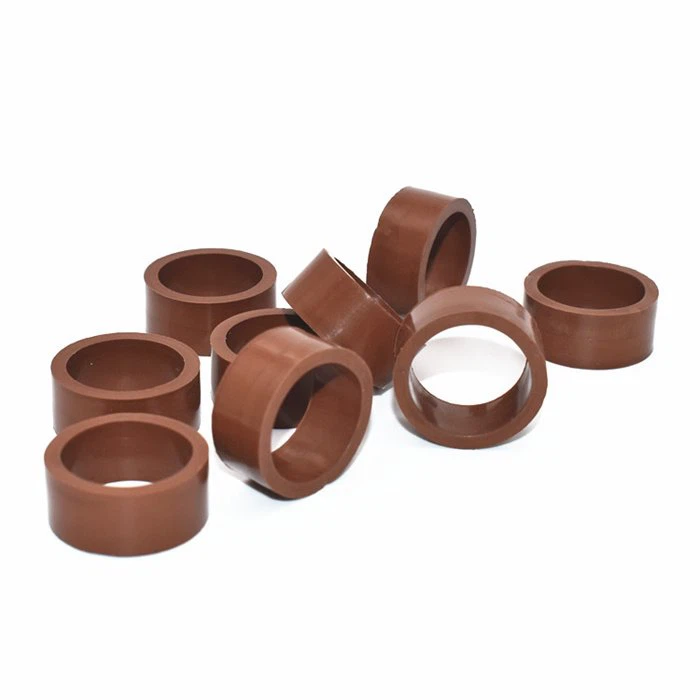

Another factor that affects the chemical resistance of Rubber Washer HNBR is temperature. Higher temperatures can accelerate the chemical reactions between the rubber and the chemicals. For example, at elevated temperatures, the swelling of HNBR in oils may be more pronounced. So, when choosing HNBR washers for an application, it's important to consider both the chemical environment and the operating temperature.
If you're dealing with a more outdoor or weather - exposed application, you might also want to look at Rubber Washer EPDM. EPDM has excellent resistance to weathering, ozone, and UV radiation, which are not the main strengths of HNBR. But for chemical - rich indoor environments, HNBR is often the better choice.
When it comes to solvents, HNBR has a mixed performance. Polar solvents like ethanol and acetone can cause some swelling in HNBR. Non - polar solvents such as hexane and toluene also have an impact, but the degree of swelling and degradation depends on the solvent type, concentration, and exposure time. In applications where solvents are present, it's crucial to test the HNBR washers under actual conditions to ensure they can perform as expected.
Silicone - based applications are also quite common, and if you're looking for a silicone option, we have Silicone Rubber Washer Black. Silicone rubber has different properties compared to HNBR. It has better heat resistance in some cases but may not have the same level of chemical resistance to oils and fuels as HNBR.
In summary, Rubber Washer HNBR is a great choice for many applications where chemical resistance is a key requirement. It can handle a wide range of oils, fuels, and some chemicals, but it's important to understand its limitations when it comes to strong acids, alkalis, and certain solvents. By considering the chemical environment, temperature, and other factors, you can make an informed decision about whether HNBR is the right rubber washer for your needs.
If you're interested in purchasing Rubber Washer HNBR or have any questions about its chemical resistance or other properties, feel free to reach out. We're here to help you find the best sealing solutions for your specific applications. Whether it's for automotive, industrial, or other uses, we can provide you with high - quality HNBR washers that meet your requirements.
References:
- "Handbook of Elastomers" by A. K. Bhowmick and H. L. Stephens
- "Rubber Technology" by Maurice Morton