

How do Brown Silicone O Rings compare to rubber O Rings?
Oct 10, 2025
Hey there! As a supplier of Brown Silicone O Rings, I've had my fair share of customers asking how these brown silicone ones stack up against rubber O rings. So, I thought I'd take a deep dive into this topic and share what I've learned over the years.
Material Basics
Let's start with the basics. Rubber O rings are made from natural or synthetic rubber compounds. Natural rubber comes from the sap of rubber trees, while synthetic rubber is man - made through chemical processes. On the other hand, silicone O rings, including our brown ones, are made from silicone rubber, which is a polymer with silicon, oxygen, carbon, and hydrogen atoms.
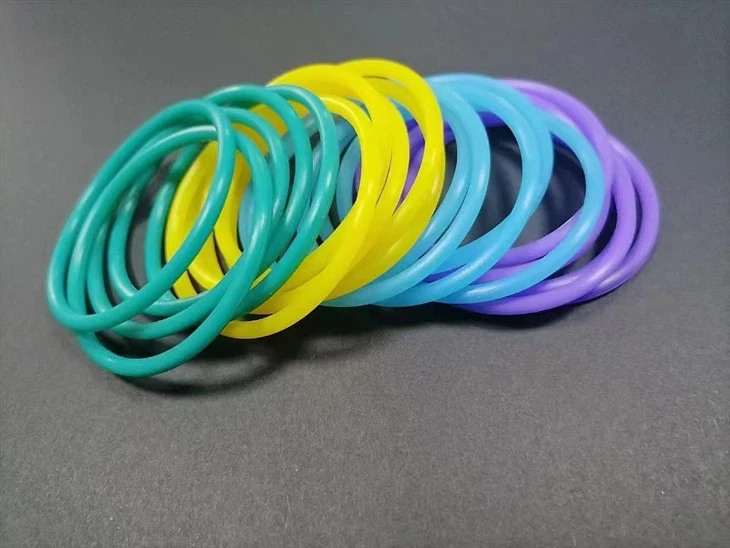
The first thing you'll notice is the color. Our Brown Silicone O Rings stand out. While rubber O rings usually come in more traditional black or gray, the brown color can be useful for identification purposes. For example, in a complex machinery setup, having different colored O rings can make it easier to quickly spot and replace the right one. You can check out Color Rubber O Ring for more on colored options.
Temperature Resistance
One of the biggest differences between brown silicone O rings and rubber O rings is their temperature resistance. Rubber O rings have a limited temperature range. Most standard rubber O rings work well in temperatures between -20°C to 100°C. Outside of this range, they can start to break down. At low temperatures, rubber can become brittle and crack, while at high temperatures, it can soften and lose its sealing properties.
Brown silicone O rings, however, are much more temperature - tolerant. They can handle temperatures from -50°C to 230°C. This makes them ideal for applications in extreme environments. For instance, in aerospace or automotive engines where temperatures can fluctuate wildly, silicone O rings are a better choice. If you're looking for low - temperature silicone O rings, ASTM D2000 AS568 O - Ring LOW TEMP is a great option.
Chemical Resistance
When it comes to chemical resistance, the two types of O rings also differ. Rubber O rings have varying degrees of resistance depending on the type of rubber. For example, nitrile rubber O rings are good at resisting oil and fuel, but they can be damaged by some chemicals like ketones and esters.
Brown silicone O rings have a broader chemical resistance. They can withstand a wide range of chemicals, including many solvents, acids, and bases. However, they are not as resistant to fuels and oils as some rubber types. So, if your application involves exposure to chemicals, you need to carefully consider which type of O ring is best.
Compression Set
Compression set is another important factor. It refers to the ability of an O ring to return to its original shape after being compressed. A high compression set means the O ring won't seal properly over time.
Rubber O rings generally have a higher compression set compared to brown silicone O rings. This means that after being compressed for a long time, rubber O rings may not bounce back as well, leading to leaks. Silicone O rings, on the other hand, have a lower compression set, which allows them to maintain a good seal for a longer period.

Durability and Longevity
In terms of durability, both types have their pros and cons. Rubber O rings are more abrasion - resistant than silicone O rings. In applications where the O ring is likely to rub against other parts, rubber may last longer. However, as we've discussed, silicone O rings are more resistant to temperature and chemical damage, which can extend their lifespan in certain environments.
Cost
Cost is always a consideration. Generally, rubber O rings are cheaper than brown silicone O rings. This is because the raw materials for rubber are more readily available and the manufacturing process is often simpler. But you have to weigh the cost against the performance. If your application requires the special properties of silicone O rings, the extra cost may be worth it in the long run.
Applications
Let's talk about where each type is commonly used. Rubber O rings are widely used in automotive engines, hydraulic systems, and household appliances. Their relatively low cost and good abrasion resistance make them a popular choice for these applications.
Brown silicone O rings are used in medical devices, food processing equipment, and high - end electronics. In medical devices, their biocompatibility and temperature resistance are crucial. In food processing, they need to be able to withstand cleaning chemicals and high - temperature sterilization. And in electronics, their ability to seal against dust and moisture in different temperature conditions is essential. You can also check out Dark Blue Color O - RING 70 SHORE for more specific options for different applications.
Conclusion
So, to sum it up, brown silicone O rings and rubber O rings each have their own unique properties. Rubber O rings are great for applications where cost is a major factor, and the environment is relatively mild. Brown silicone O rings shine in extreme temperature and chemical environments, and where long - term sealing performance is required.
If you're still not sure which type of O ring is right for your application, don't hesitate to reach out. I'm here to help you make the best choice. Whether you need a small quantity for a prototype or a large order for mass production, we can work together to find the perfect solution.
References
- "Handbook of Elastomers" by Allan N. Gent
- "Sealing Technology Handbook" by John H. Bickford